


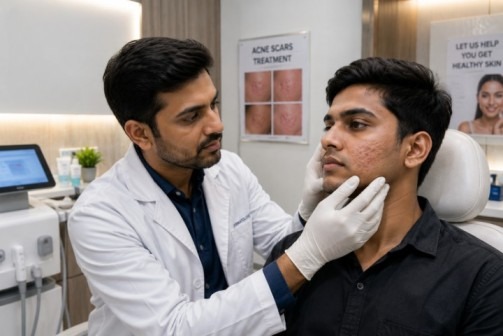
Acne scars are a common skin concern that can remain after acne heals. They may appear as deep pits, uneven skin texture, dark marks, or raised scars. Different acne scars require different treatment methods, making proper skin evaluation important before treatment.
Modern dermatology offers advanced procedures such as Fractional CO₂ Laser, microneedling, subcision, PRP therapy, and chemical peels for acne scar improvement. Patients searching for Acne Scars treatment in Gangapur Road Nashik should understand the different scar types and available treatment options for better skin care decisions.
What Are Acne Scars?
Acne scars are marks or changes in skin texture that remain after acne heals. They develop when deeper layers of the skin become damaged due to inflammation caused by pimples, cysts, or nodular acne.
When the skin tries to heal itself, it produces collagen. Too much or too little collagen during healing can lead to scar formation.
Difference Between Active Acne and Acne Scars
Many people confuse active acne with acne scars, but they are different conditions.
Active Acne Includes:
- Pimples
- Whiteheads
- Blackheads
- Pus-filled acne
- Painful cystic acne
Acne Scars Include:
- Deep pits in the skin
- Uneven skin texture
- Raised scars
- Dark acne marks
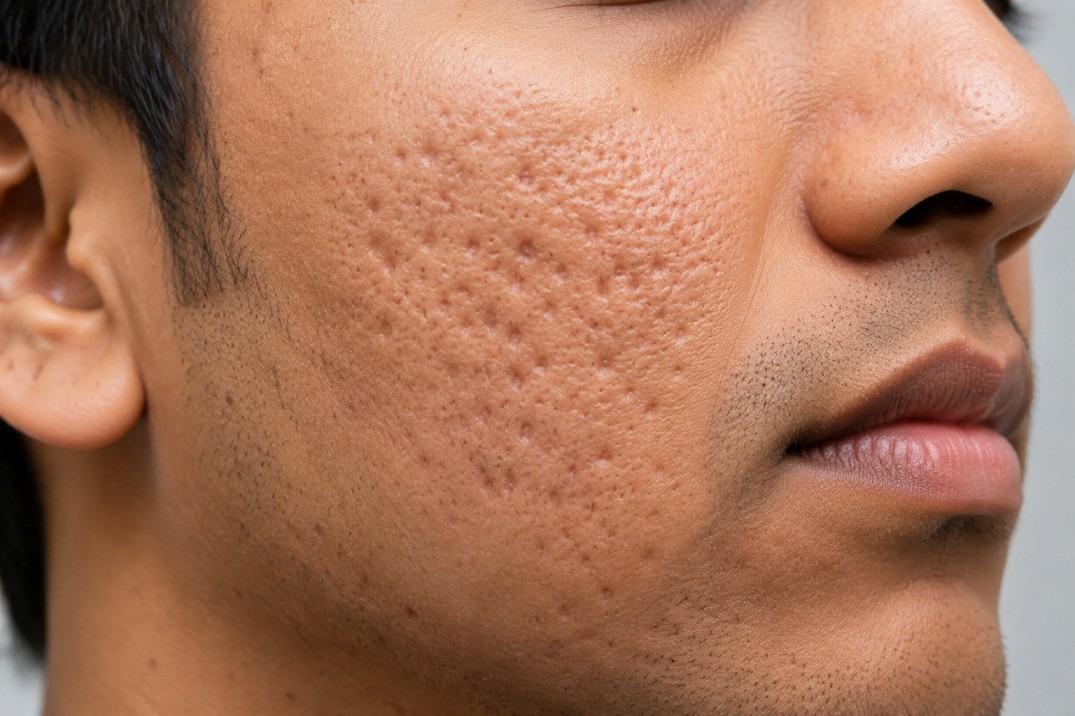
Types of Acne Scars
Different acne scars need different treatment methods.
A. Ice Pick Scars
Ice pick scars are deep, narrow scars that extend into the deeper layers of the skin. They look like tiny holes made by a sharp object.
Characteristics of Ice Pick Scars
- Deep and thin appearance
- Small openings on skin surface
- Common on cheeks and forehead
Characteristics of Ice Pick Scars
- Fractional CO₂ Laser
- TCA CROSS procedure
- Microneedling
- Combination laser treatments
Patients undergoing Acne Scars treatment in Gangapur Road Nashik commonly seek treatment for ice pick scars because they are among the most noticeable acne scar types.
B. Boxcar Scars
Boxcar scars are broad depressions with clearly defined edges. These scars may appear round or rectangular.
Features of Boxcar Scars
- Wider than ice pick scars
- Sharp borders
- Can be shallow or deep
- Mostly seen on cheeks and temples
Mild vs Deep Boxcar Scars
Mild Boxcar Scars
- Respond better to resurfacing procedures
- Improvement may be faster
Deep Boxcar Scars
- Need multiple treatment sessions
- Often require combination procedures
Suitable Treatments
- Fractional CO₂ Laser
- Microneedling RF
- Chemical peels
- Dermal fillers in selected cases
C. Rolling Scars
Rolling scars create a wave-like uneven skin texture. These scars develop due to fibrous bands pulling the skin downward.
Characteristics
- Soft depressed appearance
- Uneven skin surface
- Visible under certain lighting
- Common on cheeks
How Subcision Helps
Subcision is a minor dermatology procedure where the fibrous bands under the skin are released using a special needle. This allows the skin to lift and become smoother.
Common Treatments
- Subcision
- PRP therapy
- Microneedling
- Fractional laser treatments
PRP therapy used during acne scar procedures is different from PRP FOR HAIR GROWTH in gangapur road Nashik, although both treatments use platelet-rich plasma technology for tissue repair and regeneration.
D. Hypertrophic & Keloid Scars
Unlike depressed scars, hypertrophic and keloid scars are raised above the skin surface.
Common Areas
- Jawline
- Chest
- Back
- Shoulders
Difference Between Hypertrophic and Keloid Scars
Hypertrophic Scars
- Raised but remain within original acne area
- May reduce slowly over time
Keloid Scars
- Grow beyond original acne lesion
- More difficult to control
- May continue growing without treatment
Treatment Options
- Steroid injections
- Silicone gel sheets
- Laser therapy
- Cryotherapy in selected cases
E. Post-Inflammatory Hyperpigmentation (PIH)
PIH is not a true scar. It refers to dark or reddish marks left after acne heals.
This condition is very common in Indian skin types due to increased melanin production.
Characteristics
- Brown, black, or red spots
- Flat marks without texture changes
- More visible after sun exposure
Difference Between PIH and True Acne Scars
PIH
- Color problem
- Skin texture remains smooth
True Acne Scars
- Texture changes present
- Depressions or raised areas visible
Treatment Options
- Chemical peels
- Sunscreen use
- Pigmentation creams
- Laser toning procedures
How Dermatologists Diagnose Acne Scars
Before starting treatment, dermatologists perform a detailed skin evaluation.
Skin Examination Process
The doctor examines:
- Scar type
- Scar depth
- Skin texture
- Active acne presence
- Skin sensitivity
Scar Grading and Severity Assessment
Scars are classified as:
- Mild
- Moderate
- Severe
This helps in choosing the correct treatment plan.
Importance of Identifying Scar Type
Every acne scar responds differently to treatment. A single treatment may not work for all scar types.
For example:
- Rolling scars respond well to subcision
- Ice pick scars may require targeted procedures
- Pigmentation responds better to peels and lasers
Skin Type Evaluation
Indian skin requires careful laser selection to reduce the risk of pigmentation after procedures.
Patients seeking Acne Scars treatment in Gangapur Road Nashik should always choose qualified dermatological evaluation before starting treatment.
Acne Scar Treatment Options
Modern dermatology offers multiple advanced acne scar procedures.
A. Fractional CO₂ Laser
Fractional CO₂ Laser is one of the most effective treatments for acne scars.
How It Works
The laser creates controlled microscopic injury in the skin, stimulating collagen production and skin remodeling.
Benefits
- Improves skin texture
- Reduces scar depth
- Stimulates collagen formation
- Helps in skin resurfacing
Sessions Required
- 3 to 6 sessions
- Sessions spaced several weeks apart
Downtime
- Redness for few days
- Mild peeling possible
- Temporary sensitivity
Many clinics providing Acne Scars treatment in Gangapur Road Nashik use Fractional CO₂ Laser because it helps improve uneven skin texture and collagen remodeling effectively.
B. Microneedling
Microneedling uses tiny sterile needles to create controlled micro-injuries in the skin.
How It Helps
The process stimulates collagen and elastin production naturally.
Suitable For
- Mild to moderate acne scars
- Rolling scars
- Boxcar scars
- Enlarged pores
Recovery
- Mild redness for 1–2 days
- Minimal downtime compared to lasers
C. Subcision
Subcision is especially useful for rolling acne scars.
Procedure
A special needle is inserted under the skin to break fibrous scar bands.
Benefits
- Lifts depressed scars
- Improves skin smoothness
- Often combined with PRP or laser treatments
D. Chemical Peels
Chemical peels help remove damaged upper skin layers.
Benefits
- Improves pigmentation
- Brightens skin tone
- Mild improvement in superficial scars
- Reduces acne marks
Suitable Skin Conditions
- PIH
- Mild acne scars
- Dull skin texture
E. PRP Therapy
PRP stands for Platelet-Rich Plasma.
In this procedure, platelets from the patient’s own blood are used to improve skin healing and collagen formation.
Benefits
- Faster healing
- Better skin rejuvenation
- Often combined with microneedling or laser procedures
PRP technology is also widely used for PRP FOR HAIR GROWTH in gangapur road Nashik to support hair strengthening and scalp rejuvenation.
F. Combination Treatments
Many patients have mixed acne scar types. In such cases, dermatologists may combine multiple treatments.
Why Combination Treatments Are Used
Different scars need different approaches.
For example:
- Subcision for rolling scars
- Laser for texture improvement
- Peels for pigmentation
- PRP for healing support
Customized treatment plans usually provide better results.
Factors Affecting Acne Scar Treatment Results
Results vary from person to person.
Important Factors Include:
- Scar Depth and Severity – Deep scars need more sessions.
- Skin Type – Sensitive skin may require gradual treatment approaches.
- Healing Response – Every patient heals differently.
- Number of Sessions – Acne scar improvement usually takes multiple sittings.
- Consistency – Following dermatologist instructions improves treatment outcomes.
Can Acne Scars Be Prevented?
Prevention is always better than treatment.
Tips to Reduce Acne Scarring Risk
- Treat Acne Early – Do not ignore severe acne.
- Avoid Picking Pimples – Touching acne increases inflammation and scarring.
- Use Dermatologist-Recommended Products – Avoid harsh home remedies and strong scrubs.
- Wear Sunscreen Daily – Sun exposure can worsen pigmentation and scars.
- Follow Proper Skin Care – Gentle cleansing and moisturization support healthy skin healing.
Recovery & Aftercare Following Acne Scar Procedures
Proper aftercare is important after acne scar treatments.
Common Aftercare Instructions
- Use Gentle Skin Care
- Avoid harsh products for a few days
- Apply Sunscreen Regularly
- Sun protection reduces pigmentation risk
- Avoid Excessive Heat and Sweating
- This helps the skin heal properly
- Follow Follow-Up Visits
- Regular review helps track progress safely
Temporary Effects After Procedures
Some patients may experience:
- Redness
- Mild swelling
- Peeling
- Temporary sensitivity
These usually improve within a few days.
Frequently Asked Questions (FAQ)
1. Can Acne Scars Be Completely Removed?
Most acne scars can be significantly improved, but complete removal may not always be possible. Treatment focuses on improving skin texture and reducing scar visibility.
2. Which Treatment Is Best for Deep Acne Scars?
Deep scars often respond better to combination treatments such as Fractional CO₂ Laser, subcision, and microneedling.
3. Is Laser Treatment Painful?
Most laser procedures are performed using numbing cream to improve comfort during treatment.
4. How Many Sessions Are Needed?
The number of sessions depends on scar type, severity, skin response, and treatment method used. Most patients require multiple sessions.
5. Are Acne Scar Treatments Safe for Indian Skin?
Yes, when performed by experienced dermatologists using appropriate technology and settings.
6. What Is the Downtime After CO₂ Laser?
Downtime may vary from person to person. Mild redness and peeling may last for several days after treatment.
Conclusion
Acne scars can affect skin texture and confidence, but modern dermatology offers multiple treatment options for different scar types. Procedures such as Fractional CO₂ Laser, microneedling, subcision, PRP therapy, and chemical peels help improve acne scars gradually with proper treatment planning.
Patients seeking Acne Scars treatment in Gangapur Road Nashik should choose proper dermatological evaluation before starting treatment. Early care, personalized treatment plans, and regular follow-up can help achieve smoother and healthier-looking skin over time.